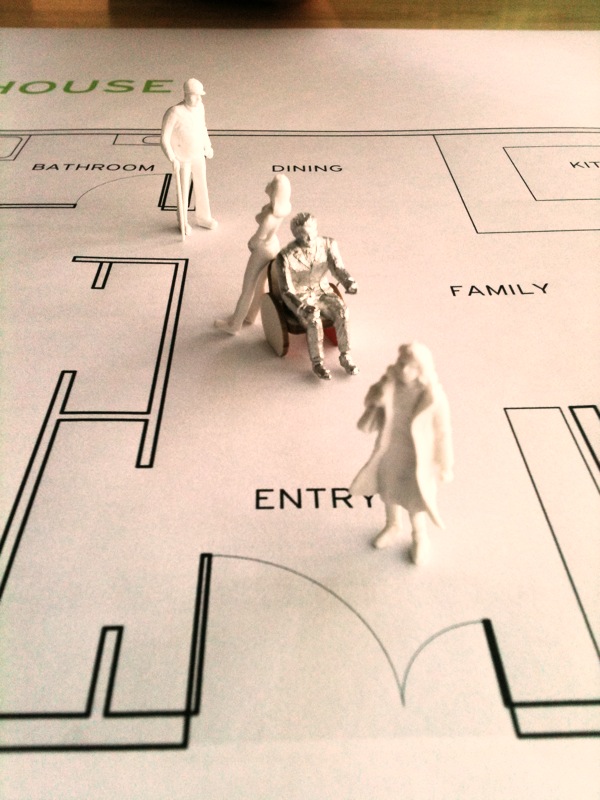
Accessible Veterans Housing
Research, insight synthesis, and spatial design for an adaptable home addressing the specific physical, mental, and emotional needs of injured veterans.
Injured U.S. service members returning from war must adapt to a home even when it nominally complies with ADA guidelines. Soldiers find individual workarounds based on their own capabilities and preferences — a reality that standard accessibility design rarely addresses.
We interviewed and observed 30 people with different accessibility needs, met with their loved ones, and gathered feedback from nearly two dozen experts. Listening to everyone's stories, the team coalesced around the idea that there isn't one collective experience, but rather seven dualities that define the complex needs of disabled soldiers and their families.
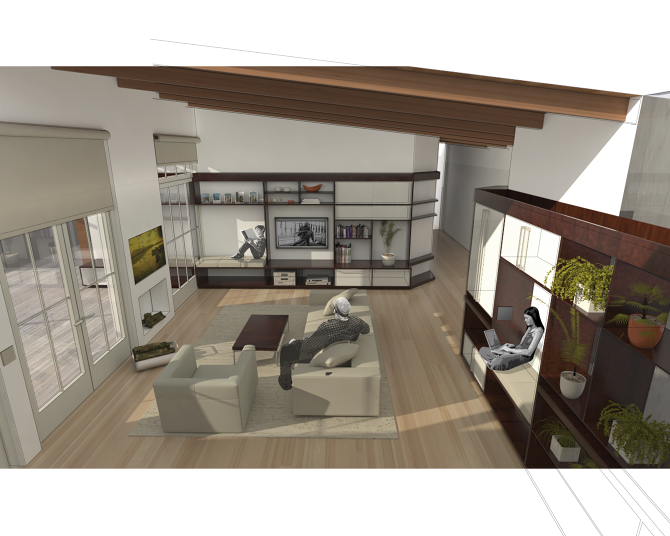
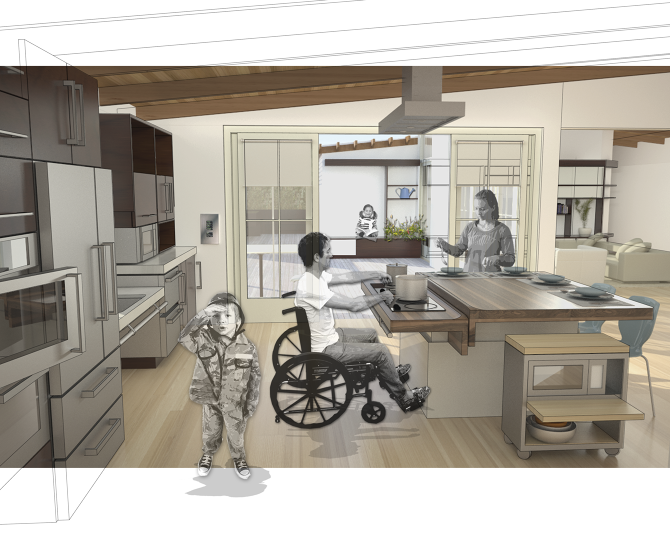
The kitchen is typically the hub of any home. Features such as adjustable-height countertops let veterans continue to participate in family activities. For veterans with PTSD, the open-plan living room includes nooks that provide a protected space without sacrificing open views.
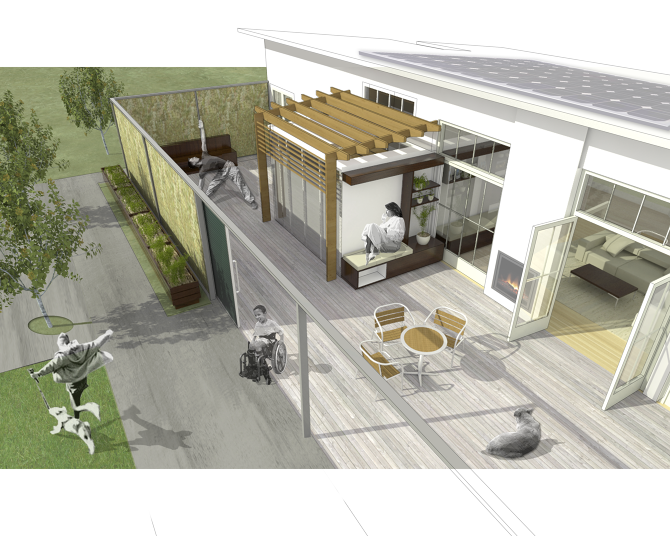
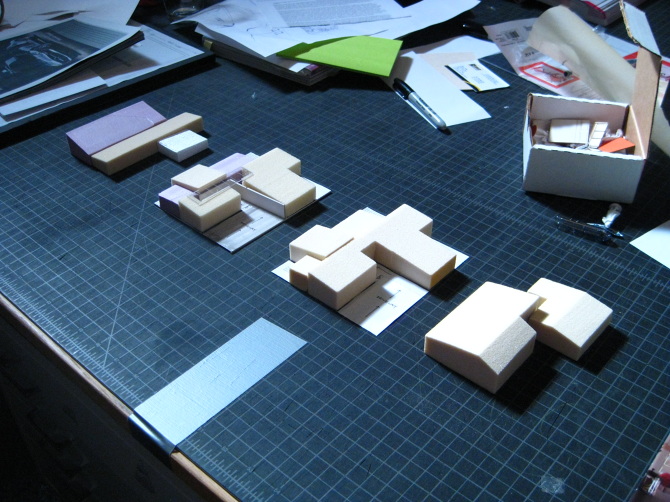
Indoor and outdoor spaces flow freely, with no steps or level changes — a baseline that proved more consequential than it first appears. We tested spatial ideas through physical volume models and full-scale interior mockups.
Lorem ipsum dolor sit amet, consectetur adipiscing elit, sed do eiusmod tempor incididunt ut labore et dolore magna aliqua. Ut enim ad minim veniam.